COVID-19 and Virus Disinfection
Virus disinfection after outbreaks is available for offices, residential properties and shared areas.
See covid-19 and virus disinfectionGet infectious disease cleanup for a home, office, school, rental or shared space in Woodstock. The process covers cleaning, EPA-registered disinfectants, label contact time and a final check of treated surfaces.
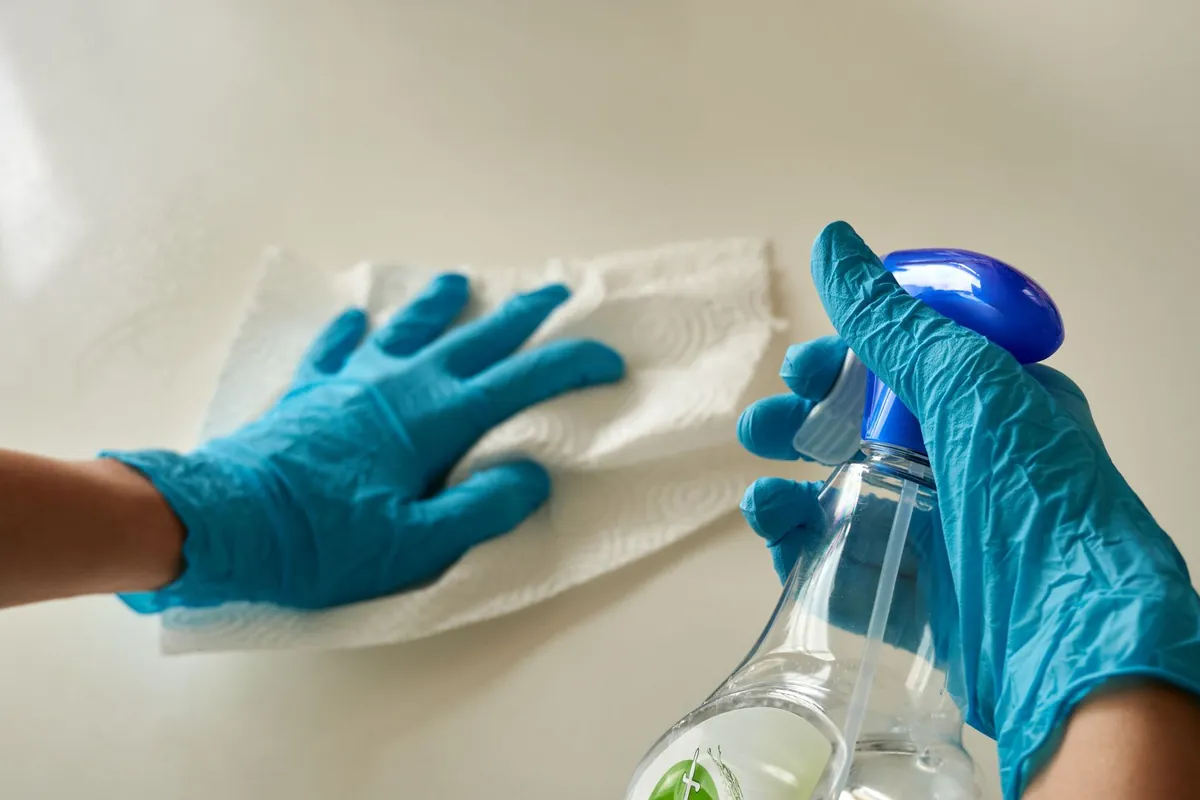
Infectious disease cleanup uses an organized cleaning and disinfection plan wherever disease-causing bacteria, viruses or other germs may be present. Attention is given to the affected zone, nearby surfaces and objects touched often.
Before cleaning starts, the space is reviewed for its use, possible contamination and surfaces that may react to a product. Workers first take away visible soil. Next, they use an EPA-registered disinfectant as its label directs. This includes leaving the surface wet for the stated contact time, which lets the product perform as intended.
This type of service applies in many places, including a home, office, rental property, school, restaurant, healthcare environment or shared vehicle. Its scope responds to a confirmed or suspected disease concern, rather than routine cleaning needs. Contamination involving blood or bodily fluids, as well as hazardous materials, is a different form of biohazard remediation that may involve taking out materials, disposing of waste and using additional protective equipment.

You need a clear list of included rooms, objects and surfaces, excluded areas and the actions taken during every step.
Sensitive items can be identified before work begins, and you can discuss what may be cleaned, moved or left untouched.
The explanation needs to address product selection, dilution, surface safety and contact time, while making clear that spraying quickly is not enough.
Crews can arrive in unmarked vehicles, limit activity to the affected areas and help you move forward without drawing attention.
You may need infectious disease cleaning when ordinary janitorial work cannot address a known illness, suspected exposure or contamination incident. Common examples are:
After an illness or exposure is reported, a home, workplace or shared facility receives focused cleaning and disinfection.
Customer spaces, staff areas, restrooms, break rooms and shared touchpoints receive cleanup services based on a set treatment plan.
In rooms occupied by someone who was ill, visible soil is cleaned before compatible surfaces are disinfected.
Added household support can target your kitchen, bathrooms, bedrooms and living areas used by others.
Your first steps should limit contact with the affected area and give the cleanup technicians clear facts about the situation. Before work begins:
Call (888) 351-0904The published range for virus decontamination is $1,500 to $3,500 per job. Cost guides list infectious disease decontamination at $2,000 to $8,000 for each job in one case and $1,000 to $8,000 in another, while a biohazard cleanup cost guide shows $1,500 to $10,000 per infectious disease disinfection job. Your cost reflects the area, germ and surface count, along with testing and air system work when either is required.
These ranges come from published national cost guides, not from a site visit. You learn what your property will cost after the on-site assessment and before any work begins.
Ask about cost: (888) 351-0904Coverage is determined by the policy language, the reason contamination occurred and the kind of property involved. Do not count on coverage for prevention-focused cleaning or routine disinfection. Before cleanup begins, contact your insurance company about the specific incident if you are able to wait.
Responsibility can depend on the lease and the part of the property involved. Check the documents first to establish who has authority to approve cleanup.
A business policy may treat cleanup costs differently from a home policy. The policy wording and cause of loss control the decision.
Insurance assistance may organize invoices, the work scope, suitable photos of the affected area and a treated-surface list for your claim records.
Check whether your policy covers the contamination, how much the deductible is and what photos, scope details or other records the insurer expects.
The suspected germ, disinfectant instructions and affected spaces shape the remediation plan. Each stage serves a specific role, beginning with entry control and ending with confirmation that the agreed scope is finished.
Cleanup involves reviewing bodily fluids or waste, affected rooms, frequently touched surfaces and sensitive items that may reshape the plan.
Nearby rooms are guarded against equipment and walking traffic by limiting access and planning movement from clean spaces into dirty ones.
Protective equipment, including gloves, is chosen to match the scope's product, task and type of exposure.
Before disinfection, suitable methods clear visible residue, dust and dirt from each type of surface.
The correct label dilution of an EPA-registered disinfectant is used on suitable surfaces and stays wet for the entire contact period.
Shared equipment and specific touchpoints such as counters, switches, bathroom fittings and door hardware are covered intentionally rather than misted generally.
Reusable tools are cleaned, disposable materials are contained and any hazardous waste is separated for the appropriate disposal path.
Documentation closes the entire process after treated areas are reviewed against the scope, giving you a clear record of the surfaces and rooms addressed.
Phone support stays available. A specialist in infectious disease disinfection takes your call, walks you through the process and confirms when work can start.
The main risks are exposure to contamination, using a product incorrectly and missing surfaces that people touch. A careful cleanup process controls each of these issues instead of relying on a quick spray.
Risks increase when products are overused, chemicals are mixed or ventilation guidance is not observed. Dilution, application and safety measures must follow the product label.
Viruses and bacteria differ in how they spread and how long they remain viable. The plan for disinfection is shaped by the location, material and suspected germ.
Contamination may travel between surfaces on tools, shoes, cleaning cloths and gloves. That risk decreases with a clearly marked workspace and controlled movement through it.
When a small blood spill is safe to clean yourself. Standard cleaning may suffice when hazardous waste is absent, no bodily fluid is present and there is no known exposure. If an illness has affected several rooms, a vulnerable person uses the space, or you cannot identify the boundaries of the affected area, professional cleanup can give you a documented and consistent process.
Surface treatment, rather than demolition, makes up most infectious disease disinfection work. Items stay in place when safe cleaning is possible. A different disposal plan may be required for bodily fluid contamination or material that cannot be cleaned away.
How long cleanup takes depends on area size, surface count, disinfectant contact time and whether sections can be treated separately. The site must first be assessed to establish a schedule you can rely on.
| Scene | Typical time on site |
|---|---|
| Focused area in a home | Frequently finished during a single work period |
| Multiple rooms or a shared worksite | May be completed through planned sections or one longer session |
| Large properties with many surface types | May need work across several planned sessions |
Infectious disease disinfection does not automatically mean odor removal. A lasting odor may come from spoiled food, sewage, moisture, bodily fluids, an animal or another source that needs its own cleanup service. Covering the smell does not remove that source, and fragrance is not a substitute for cleaning or disinfection.
What occurred in the space guides any air quality measures. Wiping surfaces, ventilating rooms and treating the air system are distinct tasks. Methods involving HVAC parts or treatment of the air need to be suitable for the building and its instructions for occupied spaces. Neither fogging nor spraying replaces detailed high-touch cleaning, full disinfectant coverage or compliance with label contact time.

How long cleanup takes depends on area size, surface count, disinfectant contact time and whether sections can be treated separately. The site must first be assessed to establish a schedule you can rely on.
The full infectious disease disinfection guide covers what is cleaned or removed, odor and air quality work, and the rules that apply in McHenry County.
Read the full infectious disease disinfection guideContainment, entry and cleanup plans can be influenced by local housing, population and access details.
Only 28.2% of homes in Woodstock are renter occupied, so many cleanup decisions may rest directly with resident owners.
The 1989 median year matters during odor work because cabinets, wall cavities, and floor layers can hold the source.
About 1,329 older residents live alone in Woodstock, representing 33.6% of seniors and making regular welfare checks especially meaningful.
Single-family homes make up 72.7% of housing in the area, so cleanup often centers on one household and its private living areas.
Ask on the call about cleanup options for neighboring communities and ZIP codes.
Virus disinfection after outbreaks is available for offices, residential properties and shared areas.
See covid-19 and virus disinfection
MRSA, norovirus and C. diff cleanup covers care settings, fitness facilities and homes.
See mrsa, c. diff and norovirus cleanup
After exposure to infectious or hazardous material, the air, room and surfaces are fully decontaminated.
See biohazard decontamination
A contaminated space is restored to safe use through biological remediation and contaminant removal.
See biohazard remediation
Commercial and industrial sites receive biohazard cleanup with minimal downtime.
See commercial and industrial biohazard cleanup
Clinics, healthcare facilities and care homes receive biohazard cleanup.
See hospital and healthcare biohazard cleanup
Workplace biohazard cleanup addresses offices after injuries or exposure incidents.
See office and workplace biohazard cleanup
Biohazard cleanup for daycares and schools takes place outside classroom hours.
See school and daycare biohazard cleanupEnvironmental control can begin with restricted access, followed by soil removal and disinfection of suitable surfaces. Other infection control measures include using protective equipment, maintaining personal hygiene and observing current health advice. Specific measures change with the possible germ and environment, meaning protocols in healthcare settings may differ from those used at homes, offices or restaurants.
Many bacteria are harmless, but some qualify as biological hazards because they are capable of causing disease. The organism involved, where contact occurs and how exposure happens determine the degree of concern. Biohazard cleanup beyond standard surface treatment may be necessary if medical waste, sewage, blood or bodily fluids are present.
Begin by identifying whether the wood has a seal, is raw or carries a different finish. Use only a cleaner and EPA-registered disinfectant that are compatible with that surface, and follow the label. When suitable, try the product on a concealed small spot. Because damaged and unsealed wood absorbs material, its treatment may differ from the method for sealed furnishings.
Begin with visible dirt removal before applying an EPA-registered disinfectant to compatible high-touch areas. Follow the label for application, ventilation, protective gear and the time the surface must remain wet. Clean reusable equipment according to directions, secure disposable waste and keep worn gloves or cloths from entering surrounding areas.
Begin by clearing people from the affected area and cleaning any soil you can see on compatible materials. Apply an EPA-registered disinfectant exactly as its label directs, including dilution and contact time. Focus on frequently touched objects and do not mix products. For current isolation, testing or medical guidance, follow your healthcare professional or public health authority.
There is no single environmental step that fits every disease and setting. Depending on the situation, cleaning and disinfection, hand hygiene, airflow, protective equipment and advised separation from others may all be important. Follow current guidance for the specific illness. Surface treatment must include initial cleaning and the full contact period stated on the disinfectant label.
Discreet, respectful infectious disease disinfection, 24 hours a day, with crews in unmarked vehicles.