COVID-19 and Virus Disinfection
Virus disinfection after outbreaks is available for offices, residential properties and shared areas.
See covid-19 and virus disinfectionGet infectious disease cleanup for a home, office, school, rental or shared space in Orland Park. The process covers cleaning, EPA-registered disinfectants, label contact time and a final check of treated surfaces.
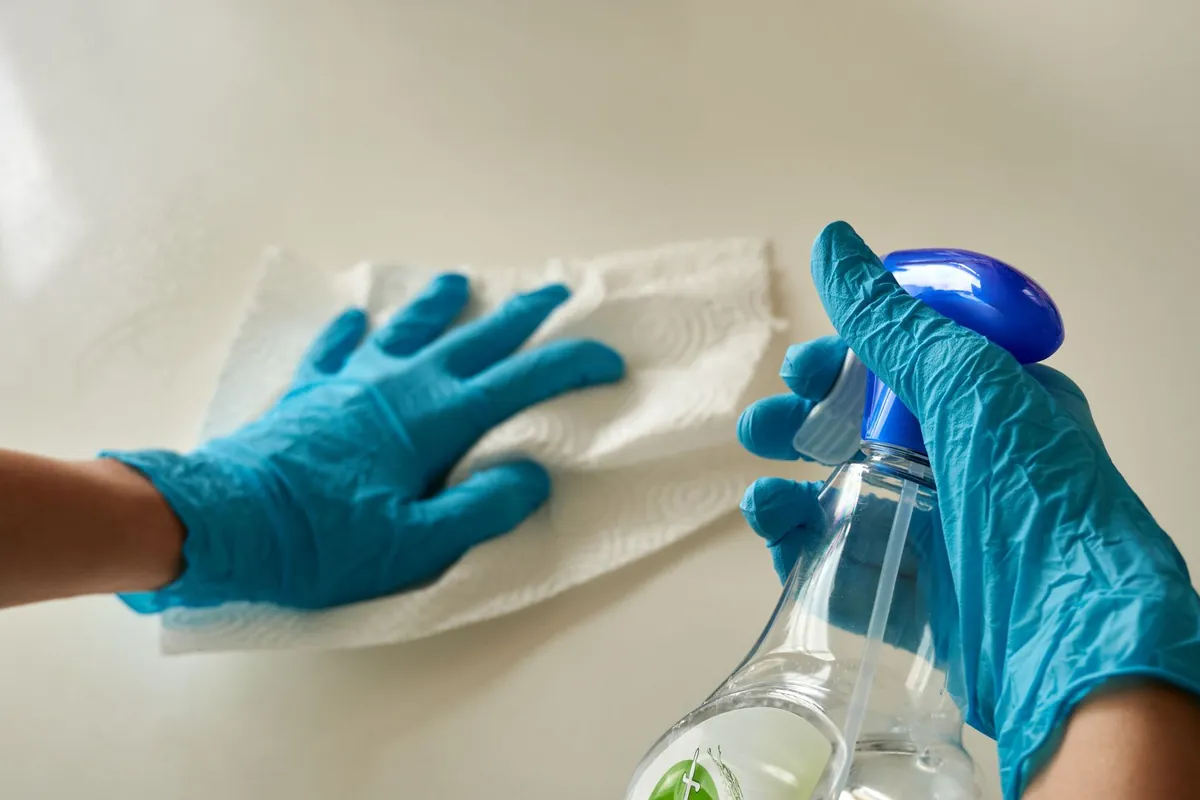
Infectious disease cleanup is a planned cleaning and disinfection process for spaces where a virus, bacterium or other disease-causing germ may be present. It focuses on affected areas, high-touch objects and surrounding surfaces that people may contact.
The cleaning process begins by identifying how the space is used, what contamination may be present and which surfaces can tolerate the selected product. Visible soil is removed first. An EPA-registered disinfectant is then applied according to its label, including the listed contact time. A surface must stay wet for that time so the product can work as directed.
This type of service applies in many places, including a home, office, rental property, school, restaurant, healthcare environment or shared vehicle. Its scope responds to a confirmed or suspected disease concern, rather than routine cleaning needs. Contamination involving blood or bodily fluids, as well as hazardous materials, is a different form of biohazard remediation that may involve taking out materials, disposing of waste and using additional protective equipment.

The product, dilution, surface compatibility and contact time should be explained clearly, without suggesting that a quick spray is enough.
You should know which rooms, objects and surfaces are included, which areas are outside the scope and what happens at each step.
Crews can arrive in unmarked vehicles, limit activity to the affected areas and help you move forward without drawing attention.
Before cleanup starts, you can point out delicate belongings and decide what can be moved, cleaned or not disturbed.
A contamination incident, confirmed illness or suspected exposure may call for more than standard janitorial work. Infectious disease cleaning can be appropriate in situations such as these:
The scope is established for shared rooms and fixtures in schools, rental properties, offices and similar places.
For customer areas, employee spaces, bathrooms, break rooms and common touchpoints, cleanup services follow an organized treatment plan.
Rooms used during an illness receive soil removal followed by disinfection on surfaces that tolerate the product.
Frequently touched places receive special attention while every surface is treated as its disinfectant label directs.
First, reduce contact with the area and prepare accurate details for the cleanup technicians. Take these steps before the job starts:
Call (888) 351-0904The published range for virus decontamination is $1,500 to $3,500 per job. Cost guides list infectious disease decontamination at $2,000 to $8,000 for each job in one case and $1,000 to $8,000 in another, while a biohazard cleanup cost guide shows $1,500 to $10,000 per infectious disease disinfection job. Your cost reflects the area, germ and surface count, along with testing and air system work when either is required.
These ranges come from published national cost guides, not from a site visit. An on-site assessment determines your property's price, which is explained to you before the cleanup starts.
Ask about cost: (888) 351-0904Coverage is determined by the policy language, the reason contamination occurred and the kind of property involved. Do not count on coverage for prevention-focused cleaning or routine disinfection. Before cleanup begins, contact your insurance company about the specific incident if you are able to wait.
A business policy may treat cleanup costs differently from a home policy. Coverage is decided by the policy's wording together with the reason for the loss.
For your claim file, insurance assistance may arrange the service scope, invoices, treated-surface records and appropriate photos from the affected area.
The involved section of the property and your lease can determine responsibility. Examine the relevant documents before you determine who can approve the work.
Confirm coverage for contamination cleanup, the applicable deductible and any insurer requirements for a scope, photographs or other documentation.
The remediation process is built around the suspected germ, the affected areas and the disinfectant label. Every step has a purpose, from controlling entry to checking that the full scope is complete.
Cleanup involves reviewing bodily fluids or waste, affected rooms, frequently touched surfaces and sensitive items that may reshape the plan.
A controlled entry and an established clean-to-dirty route keep tools and foot traffic from affecting nearby areas.
The stated exposure, work task and chosen product determine which gloves and additional protective equipment are used.
Methods appropriate to the material remove dirt, dust and residue you can see prior to disinfection.
Compatible materials receive an EPA-registered disinfectant mixed at the label dilution, and they remain wet throughout the listed contact time.
Instead of relying only on a broad mist, treatment carefully covers counters, shared equipment, door hardware, switches and restroom fixtures.
Reusable tools are cleaned, disposable materials are contained and any hazardous waste is separated for the appropriate disposal path.
Documentation closes the entire process after treated areas are reviewed against the scope, giving you a clear record of the surfaces and rooms addressed.
Phone support stays available. Your infectious disease disinfection specialist answers the phone, describes what happens next and works with you on a start time.
The biggest concerns are contamination exposure, improper use of a product and surfaces being missed where people make contact. A thorough process reduces these risks with more than a brief spray.
Using too much product, mixing chemicals or ignoring ventilation directions can create added risks. The label determines how to dilute and use the product safely.
Contaminated materials can shield germs from a disinfectant and create serious health risks through avoidable contact. Visible residue has to be cleaned away before an appropriate product remains on the surface for its entire contact time.
How long germs stay viable and how they spread varies between bacteria and viruses. The suspected germ, surface and setting guide the disinfection plan.
When a small blood spill is safe to clean yourself. Routine cleaning may be enough when there is no known exposure and no bodily fluid or hazardous waste. Professional cleanup offers you a documented, consistent approach if illness reaches multiple rooms, the space serves someone vulnerable or the affected area cannot be clearly defined.
Most disinfection for infectious disease treats existing surfaces without tearing materials out. Cleanable items are retained when this can be done safely. Materials affected by bodily fluids, or contamination that cleaning cannot remove, may follow a separate plan for disposal.
The schedule is affected by how large the area is, how many surfaces require work, whether treatment can occur by section and how long the product must stay in contact. A dependable timeframe requires an assessment of the site first.
| Scene | Typical time on site |
|---|---|
| Focused area in a home | Frequently finished during a single work period |
| Several affected spaces or a shared work setting | Could need an extended work period or separately scheduled areas |
| Large properties with many surface types | May need work across several planned sessions |
Infectious disease disinfection does not automatically mean odor removal. A lasting odor may come from spoiled food, sewage, moisture, bodily fluids, an animal or another source that needs its own cleanup service. Covering the smell does not remove that source, and fragrance is not a substitute for cleaning or disinfection.
The event determines whether air quality work is needed. Ventilation, wiping surfaces and treating an air system each involve separate work. Any treatment of air or HVAC components should follow occupied-space instructions and suit the building. Fogging or spraying cannot substitute for cleaning frequently touched surfaces, covering them fully with product and observing the contact time on its label.

The schedule is affected by how large the area is, how many surfaces require work, whether treatment can occur by section and how long the product must stay in contact. A dependable timeframe requires an assessment of the site first.
The full infectious disease disinfection guide covers what is cleaned or removed, odor and air quality work, and the rules that apply in Cook County.
Read the full infectious disease disinfection guideContainment, entry and cleanup plans can be influenced by local housing, population and access details.
The relatively small 14.2% rental share does not change safety needs, but it can make property decisions more direct.
The local median home dates to 1989, making a room by room material assessment more useful than one cleaning method everywhere.
In Orland Park, 3,565 older adults live alone, so relatives may need clear photos and records when managing cleanup from afar.
In an area with 78.2% single-family housing, sewage or fluids may reach lower levels through stairs, drains, and utility openings.
Your phone conversation can include questions about service in nearby ZIP codes and communities.
Virus disinfection after outbreaks is available for offices, residential properties and shared areas.
See covid-19 and virus disinfection
MRSA, norovirus and C. diff cleanup covers care settings, fitness facilities and homes.
See mrsa, c. diff and norovirus cleanup
Rooms, surfaces and air receive complete decontamination following infectious or hazardous exposure.
See biohazard decontamination
Biological remediation removes contamination so the space can be safely used again.
See biohazard remediation
Commercial and industrial biohazard cleanup with minimal downtime.
See commercial and industrial biohazard cleanup
Clinics, healthcare facilities and care homes receive biohazard cleanup.
See hospital and healthcare biohazard cleanup
Office and workplace biohazard cleanup after injuries or exposures.
See office and workplace biohazard cleanup
School and daycare biohazard cleanup outside of class hours.
See school and daycare biohazard cleanupUrine should not automatically be treated the same in every situation. Management can vary according to the amount, relevant waste requirements, presence of blood and health condition involved. Keep people out, do not touch the material directly and give clear details in advance to support the right protective gear and disposal route.
The scope should identify customer areas, employee spaces, restrooms and high-touch points. For food-contact areas, choose products and follow-up procedures intended for that purpose. Cleaning removes soil before disinfection, and each disinfectant must be used for its full label contact time. Current food-safety and public health instructions still apply.
Alcohol appears in some registered disinfectants, but you cannot determine suitability for a germ or surface from an ingredient name alone. Make sure the intended purpose appears on the label and comply with its directions, including contact time. Avoid using homemade blends, beverage alcohol or the contents of any unmarked container as a disinfectant.
Begin by identifying whether the wood has a seal, is raw or carries a different finish. Choose only a suitable cleaner and an EPA-registered disinfectant that the surface tolerates, using both according to label directions. When suitable, try the product on a concealed small spot. Porous wood that is unfinished or damaged can require another approach than furniture with a sealed surface.
Many bacteria are harmless, but some qualify as biological hazards because they are capable of causing disease. The organism involved, where contact occurs and how exposure happens determine the degree of concern. Ordinary surface disinfection may not be enough when contamination with sewage, medical waste, bodily fluids or blood calls for biohazard cleanup.
It depends on your policy and the cause of the cleanup. Cleanup resulting from a covered property loss can receive different treatment than disinfection done as a preventive measure. Before work begins, speak with your insurance company, explain only what you know and check whether approval is required along with the deductible, exclusions and documentation needs.
You can request respectful, discreet infectious disease disinfection 24 hours a day, and crews use unmarked vehicles.