
Bodily Fluid Cleanup
Bodily fluid cleanup removes fluids and disinfects affected areas in businesses, homes and care settings.
See bodily fluid cleanupGet urine stains and odor removed from floors, subfloors, furniture and personal property in Lake Holiday. Cleanup finds hidden saturation, treats recoverable surfaces and removes materials that cannot be restored.

Urine cleanup covers an inspection for contamination, its removal from property and building materials, and treatment for lingering odor. Flooring, furniture, walls, subfloor, personal possessions and surrounding areas are included in that evaluation.
Household cleaning done promptly may resolve a fresh, limited spot if the surface is sealed. Urine that entered grout, upholstery, drywall, wood or carpeting is different, as is recurring contamination, a strong smell or a source you cannot locate. Such issues commonly appear in care circumstances, empty homes, rental units, hoarding conditions and properties where incontinence occurred. Cleanup decisions depend on an individual assessment of the site.
Removing the source, rather than covering its odor, is the goal. Technicians examine the space, trace smells and discoloration through absorbent layers, sort salvageable belongings from materials requiring removal, and match the cleaning product to the surface. When feces, blood or another bodily fluid is present with urine, biohazard remediation, hazardous waste disposal and protective equipment may be necessary too.

What can stay, what might be removed and what affects the scope is explained before moving forward with the cleanup process. The right team should also explain any serious health concern in plain language.
Your insurance company may use organized photographs, disposal records and notes on damaged materials as insurance assistance, as may your landlord or property manager.
Crews arrive in unmarked vehicles and keep the affected area private, which matters in homes, care situations, rentals and workplaces.
You are consulted about furniture, records, keepsakes and other possessions from your household or loved ones prior to any disposal choice.
Professional urine cleaning services are most useful when contamination is repeated, widespread, hidden or mixed with other waste. Common situations include:
If feces and urine are mixed, contaminated porous materials need cautious removal under more protective cleanup controls.
When clutter hides contaminated materials, older marks and smells in several rooms, the entire process must follow an orderly sequence.
After a tenant leaves, you may find carpet, bedroom, bathroom or closet stains that standard turnover cleaning will not correct.
Old contamination can remain in an empty property's furniture and floor layers even after you remove what was visible.
Begin by keeping contact limited and stopping additional damage. To avoid carrying residue from the affected space into clean areas, follow these steps:
Call (888) 351-0904There is no urine-specific range in the approved cost source. As planning context, the closest related entry runs from $500 through $2,500. It covers small blood or fluid cleanup. The other published reference lists blood cleanup at $300 through $4,000. Those references do not state urine cleanup prices. Scope varies with affected materials, room count and odor that may have reached walls or subfloor.
Published national cost guides are the source for these ranges, rather than an inspection of your property. After an on-site assessment, the price for your property is determined and shared with you before cleanup begins.
Ask about cost: (888) 351-0904Coverage depends on what caused the contamination, the policy terms and whether the damage happened suddenly or developed over time. Insurance companies make decisions from the exact event and policy, so ask your insurance company to examine both before work begins when possible.
Repeated or lasting contamination may be treated differently under a policy than sudden damage. Find out which cause qualifies, which records are required and how much your deductible is.
Victims of violent crime can ask the Illinois Attorney General's Crime Victim Services Division whether cleanup costs can be included in a compensation claim. Insurance is usually checked first. This help may apply only when the contamination is tied to a qualifying crime, so confirm eligibility with the program.
Who is responsible for payment can depend on local requirements, the contamination source and your lease. Tenants and property owners need a record of the condition before affected materials are taken away.
Confirm which records are required, including possible photos, lists of items, moisture findings, disposal paperwork and the cleanup scope. Put the adjuster's guidance and insurance claim number in one place.
To complete urine remediation, the path of contamination is followed from the surface into lower materials. Cleanup calls for assessing every material, clearing residue and making sure no odor source remains. Both the extent of the urine and any other hazardous substances determine how the work proceeds.
Trained technicians examine every affected room, discuss the source and its duration, and check beyond visible spots for odor, moisture damage and stains.
The work zone is kept separate from clean rooms. Site conditions determine the protective equipment used, with particular care when other bodily fluids are present.
Flooring edges, seams, furniture bases and wall lines are checked to learn how far liquid traveled and which layers are affected.
Carpet pad, particleboard, unfinished wood or other deeply saturated materials may be removed when cleaning cannot reach all contamination.
The process cleans away residue on restorable material before using a urine treatment suitable for that particular surface. Products stay in place for the label's stated contact time.
Odor treatment targets the source in cracks, seams, grout and subfloor instead of covering it with fragrance. Managed airflow can help surfaces dry and improve air quality.
The treated space receives another inspection once it is dry. A lingering smell may indicate concealed material requiring further treatment.
Once cleanup is complete, removed carpet, pad, baseboards or subfloor sections can be replaced by the appropriate restoration services so you can move forward with repairs.

You can call anytime. A urine cleanup specialist answers, explains the steps and agrees a start time with you.
Old or large-scale human urine contamination can cause unhealthy conditions that may call for professional cleanup, although urine itself is not automatically regulated as a biohazard.
Carpet, pad, unfinished wood, particleboard and drywall can hold liquid below the surface. A quick wipe may leave contamination and odor behind.
Urine without visible blood is not treated as blood under the OSHA Bloodborne Pathogens Standard. Take more care when you suspect feces, blood, an infectious illness or another bodily fluid.
Accumulated urine may produce a powerful smell that irritates your nose, throat or eyes. Ventilate only when smells cannot travel into surrounding areas, and limit the time you spend inside the room.
When a small blood spill is safe to clean yourself. On a sealed, non-porous surface, you can address a minor fresh spot by wearing disposable gloves, absorbing the urine, cleaning the area and applying a suitable disinfectant exactly per label directions. Professional cleanup is needed for urine that saturates porous items, affects a broad area, returns repeatedly or is combined with feces, blood or sharps.
Materials stay when residue can be fully reached and removed. Deeply saturated porous materials may need removal because surface treatment cannot reach what soaked inside.
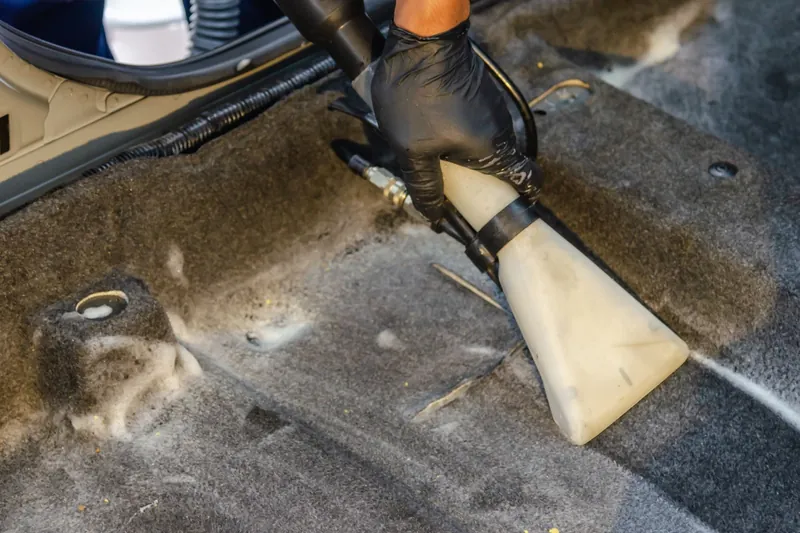
A small surface job might require only part of a day. Work can last longer when repeated urine exposure extends through carpeting, subfloor or multiple rooms. Time for drying, checking odor and taking out damaged materials is also needed, so the schedule is determined once the affected layers have been examined.
| Scene | Typical time on site |
|---|---|
| A sealed surface with a small affected area | Often part of one workday |
| One room with carpet and pad affected | Often one to two workdays, plus drying |
| Several rooms or subfloor removal | Often several workdays, plus restoration |
Every contaminated layer must be located before urine odor can be removed. Paint, fragrance and sprays applied at the surface may briefly cover a smell, but they cannot stop its return when urine is still held by subfloor, grout, wall edges, furniture filling or carpet pad. Repeated staining sometimes makes selective removal necessary to reveal the source completely.
Once residue is removed and saturated materials are dealt with, each salvageable surface is treated according to its material. Controlled drying, filtration and moving air can assist the room's return to normal. A follow-up check occurs when the area is dry, since moisture can temporarily affect the apparent strength of an odor.

A small surface job might require only part of a day. Work can last longer when repeated urine exposure extends through carpeting, subfloor or multiple rooms. Time for drying, checking odor and taking out damaged materials is also needed, so the schedule is determined once the affected layers have been examined.
The full urine cleanup guide covers what is cleaned or removed, odor and air quality work, and the rules that apply in Illinois and DeKalb County.
Read the full urine cleanup guideLocal population patterns, housing and site access may affect how containment and cleanup are planned.
In an area with 7.8% renter occupancy, direct homeowner approval can simplify choices about opening walls or replacing affected finishes.
Local housing centers on 1988, making inspection beneath finished surfaces important when contamination extends past the visible area.
In Lake Holiday, 444 older adults live alone, making privacy important when relatives, landlords, or building staff become involved.
A single-family share of 84.0% makes private entrances useful for discreet equipment movement during a sensitive cleanup.
Your phone conversation can include questions about service in nearby ZIP codes and communities.
Bodily fluid cleanup removes fluids and disinfects affected areas in businesses, homes and care settings.
See bodily fluid cleanup
Rentals, residences and public bathrooms receive human feces cleanup and disinfection.
See human feces cleanup
Cleanup treats biohazards on upholstery and carpeting, or removes affected materials safely when needed.
See biohazard carpet and upholstery cleaning
Hoarding cleanup combines respectful sorting, removal and deep cleaning.
See hoarding cleanup
Homes made unsafe for living by squalor and filth receive cleanup.
See filth and squalor cleanup
Biohazard cleanup addresses Airbnb accommodations, hotels and other rental units.
See hotel, airbnb and rental biohazard cleanup
After exposure or injury, workplace biohazard cleanup covers offices and other work sites.
See office and workplace biohazard cleanup
Disinfection and drying follow sewage cleanup of Category 3 black water from raw sewage.
See raw sewage cleanupStrong odor from accumulated urine can irritate your eyes, nose and throat, especially in a closed room. If irritation, nausea, coughing or headache begins, move away from the affected area. Avoid mixing chemical products to address the smell. Added fragrance only masks smells, while source identification and removal address contamination more dependably.
A small surface area may take part of a workday. Cleaning one carpeted room may last one to two workdays before the drying period is complete. Work may last longer with multiple affected rooms or harmed subfloor, particularly if material removal and replacement are necessary. A final smell assessment belongs at the end of the surface drying period.
The cleanup concern increases when urine is combined with feces, which can contain organisms capable of causing illness. Keep people and pets away, avoid sweeping or using a household vacuum, and do not press the waste deeper into porous material. Professional feces and urine cleanup may be appropriate for large, old or widespread contamination.
Porous material may retain smells and residue after urine dries. A little dried urine on a nonporous surface is not the same as recurring saturation in furniture, carpeting or wood. Avoid creating dust from contaminated residue, wear gloves, and seek professional cleanup when the affected area is large, hidden or mixed with other bodily fluids.
Consider professional cleanup when urine is combined with blood or feces, reaches multiple rooms, penetrates porous materials, covers a broad area or keeps causing odor. It is also useful when contamination is hidden by clutter, flooring or furniture and you cannot see where the affected area ends.
When urine contains no visible blood, OSHA does not automatically place it among bloodborne pathogen hazards under rule 29 CFR 1910.1030. Possible infectious illness, visible blood or the presence of feces changes how the urine should be treated. Older or extensive deposits may cause smells, harm surfaces and make the indoor space unhealthy.
You can request respectful, discreet urine cleanup 24 hours a day, and crews use unmarked vehicles.