Death Cleanup
Cleaning a home after someone dies, including fluids, odor and affected belongings.
See death cleanupGet decomposition fluids, affected materials and odor removed from a home, apartment, rental or business in Countryside after officials release the property. Cleanup timing depends on the affected area and materials.
Unattended death cleanup means clearing decomposition fluids, odor and contaminated possessions after someone was found some time after dying, then disinfecting and cleaning the impacted area.
Taking the person into care is the role of the funeral home or medical examiner, not cleaning the home. Following the official release, you or whoever is responsible for the property arranges cleanup. This may be described as post death cleanup or unattended death clean up. Another name is decomposition cleanup. The phrase biohazard clean up after death also applies.
The cleanup process follows contamination beyond the visible area. Bodily fluids can move through bedding, carpet and pad, enter flooring seams, reach subfloor, or collect beside walls and furniture. Cleanup technicians identify those paths, remove materials that cannot be fully cleaned, treat remaining surfaces with an EPA-registered disinfectant for its labeled contact time, and prepare hazardous waste for lawful disposal.
The remediation process also includes odor removal. Treatment of remaining surfaces and air begins only after source removal. Personal property outside the affected areas can then be sorted, cleaned when appropriate, or set aside for you to inspect. Death scene cleanup is usually completed before repairs such as replacing drywall, flooring or baseboards begin.

Your call is answered around the clock, and crews use unmarked vehicles. Entry can be arranged while you avoid both the room and conversations about private details with neighbors.
You receive an explanation of findings, removable items, materials that may remain and cost factors prior to cleanup. Each step includes time for your questions.
Safely reachable photos, records, jewelry and additional valued possessions are set aside. Whenever circumstances allow, you choose the treatment for belongings placed aside.
Cleanup photos, work details and disposal documents may be arranged for insurance companies, property managers or landlords. Clear records help you move forward with repairs and claim evaluation.
Unattended death cleanup services are needed when a death was undiscovered long enough for fluids or odor to affect the property. The setting changes, but the need to keep people away and trace contamination stays the same.
A living room, bedroom or bathroom can contain affected belongings, baseboards, flooring and bed materials. Trained technicians can evaluate how widely contamination moved while you remain beyond the affected room.
Odor and fluids can move into shared walls, subflooring or a downstairs unit. The family, insurance company, tenant and property manager may each require photos and clearly marked work limits.
A landlord or property manager may arrange access after officials release the unit. Personal property remains in place pending the authorized person's decision about cleaning, saving or removal.
Bodily fluids may soak into seats, flooring, padding and inner panels. An assessment shows which components allow cleaning and which require removal for thorough biohazard remediation.
Stay outside the affected area until its official release. The steps below can protect other people and you while preserving the investigation and any insurance claim that may follow.
Call (888) 351-0904Published guides put many cases of unattended death cleanup at $2,000 to $7,000. A one-room death discovered recently may cost $2,000 to $5,000. When one to two weeks passed before discovery, the range may be $8,000 to $18,000. The final amount follows an on-site assessment of the discovery delay, material and fluid penetration, required odor treatment and hazardous waste volume.
These ranges come from published national cost guides, not from a site visit. An on-site assessment determines your property's price, which is explained to you before the cleanup starts.
Ask about cost: (888) 351-0904A homeowners, renters or commercial property policy may pay for cleanup following an unattended death. Whether coverage applies depends on the cause of loss, policy terms, deductible and exclusions.
Call the insurance company promptly and ask specifically about biohazard remediation, contaminated material removal, odor treatment and repairs. Record your claim number, then check before disposing of any items.
The payment arrangement is affected by the lease, policy details and each owner's responsibilities. A tenant's policy may concern personal property as the landlord arranges work affecting the building.
Victims of violent crime can ask the Illinois Attorney General's Crime Victim Services Division whether cleanup costs can be included in a compensation claim. Insurance is usually checked first.
Confirm the adjuster's documentation requirements. Itemized work details, assessment images, disposal documentation and notes on removed items may support the insurance company's claim evaluation.
The unattended death cleanup process moves in a controlled order, from release and assessment through removal, disinfection, odor treatment and final records. Every step depends on what the assessment finds.
After confirming release, technicians coordinate entry with you, inspect the affected area and surrounding spaces, document findings, and identify required work.
Clean areas of the property are divided from the work zone. Floor protection, barriers and controlled airflow help limit movement through hallways and shared spaces.
Cleanup technicians use protective clothing, gloves, eye protection and respiratory protection suited to the work. OSHA Bloodborne Pathogens Standard 29 CFR 1910.1030 applies when workers may contact blood.
When full disinfection is impossible, affected flooring, drywall, furnishings, carpet, pad or bedding is carefully removed section by section. You can inspect keepsakes and unaffected personal property after they are set aside.
An EPA-registered disinfectant is used on cleaned hard surfaces and allowed to remain for all label-stated contact time. Crevices receive attention along with surrounding surface areas.
Odor work follows removal of the affected source. HEPA air scrubbers, hydroxyl equipment or other treatment may suit the space and its remaining materials.
Contaminated materials are sealed in appropriate containers and moved through a planned route. Disposal records can be kept with the cleanup photos and insurance documents.
After cleaning and odor work, the affected area receives an inspection. You receive documentation of finished work, after which restoration services can begin on damaged finish materials.

Phone support stays available. A specialist in unattended death cleanup takes your call, walks you through the process and confirms when work can start.
An unattended death can leave bodily fluids and contaminated porous materials that require protective equipment, controlled removal and thorough disinfection.
During an already difficult time, entering the place of a loved one's death can cause more distress. You may coordinate entry without seeing the affected room and point out valued possessions while staying somewhere safe.
Carpet may allow fluids into its pad and subfloor, while trim gaps and furniture joints can also be reached. Treating just the mark you can see may leave odor and contaminated materials in place.
Some bodily fluids and blood may contain bloodborne pathogens. The CDC states that surface survival for hepatitis B can reach at least seven days. Do not make direct contact or consider dried contamination harmless.
When a small blood spill is safe to clean yourself. Do not treat an unattended death like a small spill at home. Leave the affected area untouched, unsprayed and unvacuumed. Leave the door shut and prevent contamination from entering surrounding areas. After the medical examiner or law enforcement releases the property, you may arrange professional cleanup.
A limited cleanup after an unattended death may require about one day when only one room is involved. Subfloor removal, extensive treatment for odor or contamination across several areas can extend the work to several days. You receive the clearest timing after the on-site assessment.
| Scene | Typical time on site |
|---|---|
| Limited area with cleanable surfaces | May take about one day |
| A single room requiring removal of porous items | May take one to three days |
| Several areas involving removal of building materials | May take several days |
Every affected source must be located and removed before decomposition odor can be resolved. Paint, fragrance or a surface spray will not correct fluid absorbed into drywall, subfloor, carpet padding, furniture or gaps. Technicians inspect outside the visibly affected space instead of covering the smell temporarily.
After source removal and cleaning, HEPA air scrubbers can capture airborne particles. Hydroxyl treatment may be used while people are present when the equipment instructions allow it. Ozone treatment requires an empty controlled space and ventilation before reentry. HVAC returns, vents and nearby soft materials are checked when odor has moved into surrounding areas.

Federal OSHA Bloodborne Pathogens Standard 29 CFR 1910.1030 sets worker requirements for exposure control, protective equipment, training and practices when blood exposure may occur.
Any disinfectant targeting the organism must have EPA registration and be applied as its label directs. Keep the surface wet throughout all contact time shown on the label.
Illinois treats soaked materials from a biohazard scene as potentially infectious medical waste (PIMW). Illinois EPA rules control how it is packed, transported and treated, so it cannot go in household trash.
In Cook County, the Cook County Medical Examiner's Office investigates sudden and unexplained deaths. Cleanup starts after police or the medical examiner release the scene.
A limited cleanup after an unattended death may require about one day when only one room is involved. Subfloor removal, extensive treatment for odor or contamination across several areas can extend the work to several days. You receive the clearest timing after the on-site assessment.
The full unattended death cleanup guide covers what is cleaned or removed, odor and air quality work, and the rules that apply in Illinois and Cook County.
Read the full unattended death cleanup guide
Planning for access, containment and cleanup can depend on local population, housing and entry conditions.
Only 28.0% of homes in the area are renter occupied, so many cleanup decisions may rest directly with resident owners.
A 1975 median build year points to varied interior finishes, so each affected material needs its own cleaning or removal decision.
Although the share is 25.2%, seniors living alone can still face delayed discovery after an illness, injury, or death.
At 47.8% single-family housing, crews should confirm entrances, neighboring units, and ventilation before setting the cleanup boundary.
You can ask about cleanup in nearby communities and ZIP codes during the call.
Cleaning a home after someone dies, including fluids, odor and affected belongings.
See death cleanup
Cleanup clears fluids from decomposition out of floors, subfloors and furnishings.
See decomposition cleanup
Death odor removal targets the source through ozone treatment, hydroxyl and air scrubbers.
See death odor removal
Any property can be cleared of blood, bodily fluids and other infectious material, then disinfected.
See biohazard cleanup
Trauma scene cleanup is needed after violent events, accidents and injuries.
See trauma scene cleanup
Blood cleanup clears blood from furniture, walls, hard floors and carpet, followed by safe disposal.
See blood cleanup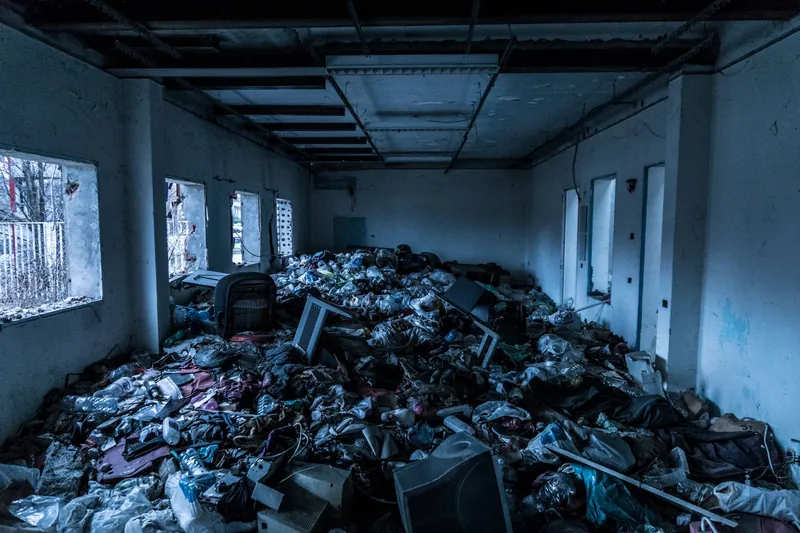
Respectful sorting, item removal and deep cleaning are included in hoarding cleanup.
See hoarding cleanup
Families are spared from facing the scene through discreet and considerate suicide cleanup.
See suicide cleanupProperty cleaning is not performed by law enforcement, funeral homes or the medical examiner. Once officials release the property, an authorized representative, owner, landlord or family member arranges an unattended death cleanup service. Trained technicians may remove affected items, disinfect remaining surfaces, address odor and package hazardous waste for correct disposal.
Avoid entering the space to start your own cleaning. Professional work starts by containing the area and evaluating contamination that is visible or hidden. The process removes porous items reached by fluids, cleans hard materials, applies an EPA-registered disinfectant for the complete contact time, addresses odor sources and documents waste disposal.
Ownership, lease language, insurance conditions and local rules determine responsibility. Work involving the apartment or building is often coordinated by the landlord or manager, with a renter's policy potentially applying to belongings. Leave the affected area undisturbed until assessment, and ask both insurance companies about applicable terms.
Published guides place many cases between $2,000 and $7,000. A recent one-room case may be $2,000 to $5,000, while discovery after one to two weeks may cost $8,000 to $18,000. The on-site assessment considers time before discovery, material penetration, odor treatment and waste volume.
The cause of loss, policy, exclusions and deductible determine whether coverage may apply. Ask right away whether restoration and odor treatment are covered, along with contaminated materials removal and biohazard remediation. Retain photos, disposal records, work details and the claim number, then consult your adjuster before throwing away affected belongings.
A limited area may take about one day. Removal of carpet, padding or subfloor in one room may require one to three days. Multiple affected areas can require more time. The post-assessment schedule depends on access, fluid penetration, odor spread, personal property and total waste.
You can request respectful, discreet unattended death cleanup 24 hours a day, and crews use unmarked vehicles.